Sudan in July 2026: A Convergence of Humanitarian Collapse
Eric Reeves, Co-Chair of Project Zamzam: Responding to Sexual Violence and Humanitarian Need in Darfur and Eastern Chad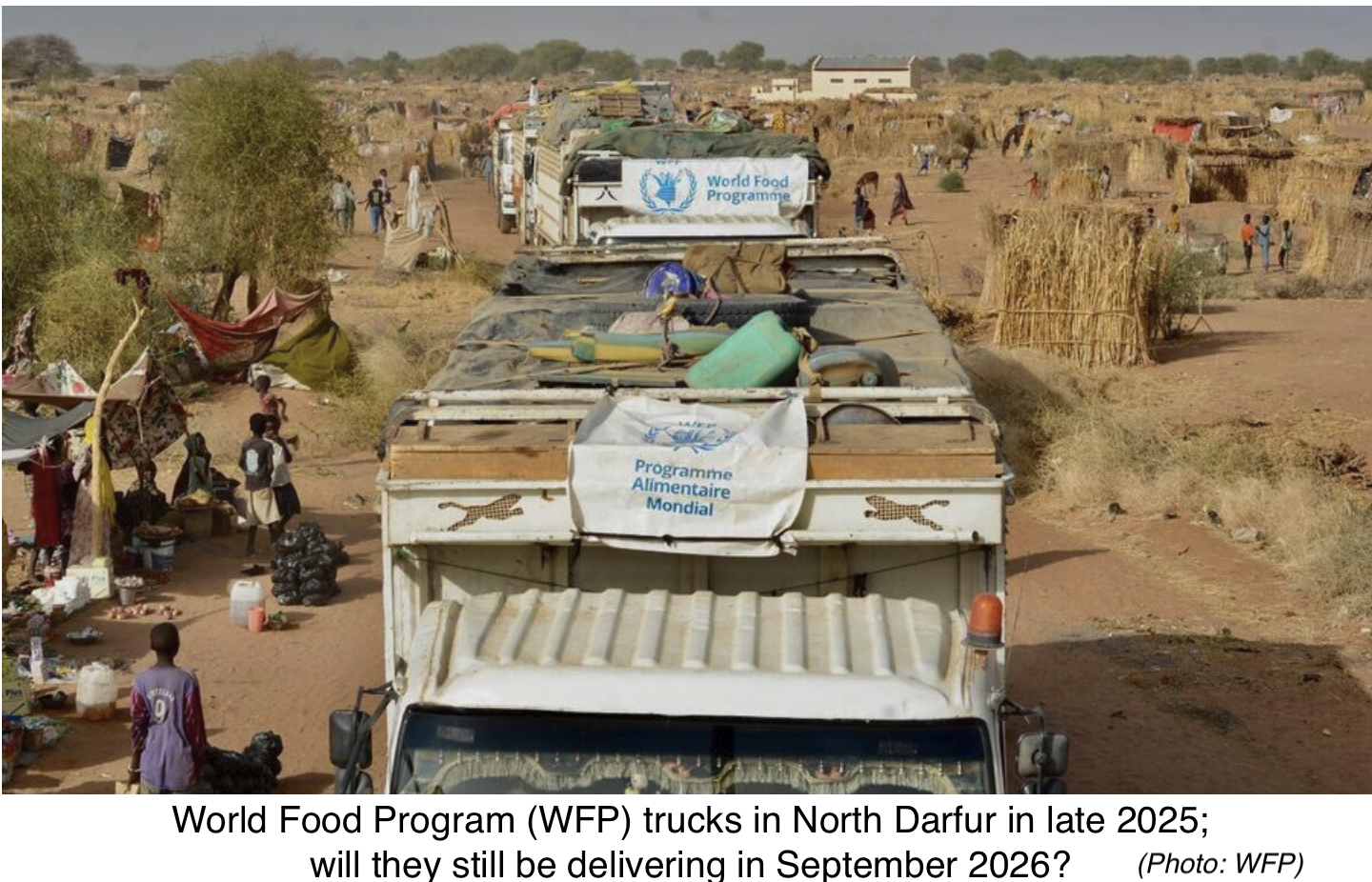
The World Food Program warning that it may soon be forced to reduce food assistance in Sudan because of severe funding shortfalls comes at a moment when nearly every major indicator of the country’s humanitarian crisis is moving in the wrong direction. Considered individually, few of the developments of recent weeks are entirely unexpected. Collectively, however, they reveal something more consequential. Sudan’s catastrophe is no longer adequately understood as a collection of parallel emergencies.
Military conflict, mass displacement, famine, epidemic disease, economic collapse, and the erosion of humanitarian capacity have become increasingly interdependent, each reinforcing the others in ways that accelerate civilian suffering and complicate every effort at relief.
This convergence defines Sudan in July 2026.
The war that began in April 2023 has already produced the world’s largest displacement crisis. It has also created what is now widely recognized as the world’s gravest humanitarian emergency. Yet these descriptions, accurate as they are, risk obscuring the underlying dynamics of the catastrophe. Displacement is driving hunger; hunger is increasing vulnerability to disease; disease is raising mortality among populations already weakened by prolonged malnutrition; continuing military operations are generating successive waves of displacement; and all of these developments are unfolding while the international humanitarian system itself faces diminishing resources and extraordinary operational constraints.
No single statistic adequately conveys this reality. It is the interaction among these crises that has become the defining feature of Sudan’s humanitarian collapse.
Zamzam: A Turning Point
Few events better illustrate this accelerating convergence than the destruction of Zamzam IDP camp outside El Fasher in April 2025—a destruction carried out with fierce brutality by the Rapid Support Forces militia. For years Zamzam had stood as both a symbol of Darfur’s long humanitarian tragedy and one of the principal centers through which international relief organizations attempted to sustain hundreds of thousands of internally displaced civilians.
Long before its destruction, the camp had become synonymous with extreme vulnerability. It was in Zamzam that the UN first confirmed international assessments of malnutrition amounting to famine (August 2024), a declaration that reflected not an isolated emergency but the cumulative consequences of war, displacement, disrupted agricultural production, and systematic obstruction of humanitarian assistance. The Rapid Support Forces’ assault on Zamzam therefore represented far more than the capture of another geographical objective: It destroyed one of the largest concentrations of humanitarian resources remaining in North Darfur.
The consequences continue to unfold.
Many thousands died during the assault itself, in its immediate aftermath, or while fleeing under conditions of extraordinary deprivation. Hundreds of thousands more escaped toward Tawila or continued westward toward eastern Chad, joining what has become one of the largest refugee movements anywhere in the world. Communities already struggling to support earlier arrivals suddenly confronted overwhelming new humanitarian demands.
The effects radiated outward almost immediately.
Tawila, never designed to absorb such numbers, became an emergency refuge for exhausted families arriving after days or weeks of flight. Eastern Chad, whose humanitarian agencies had already been operating under severe resource constraints, faced yet another massive influx of refugees requiring food, shelter, water, sanitation, medical care, and psychosocial support. Displacement itself became an engine driving every other dimension of the crisis.
The Humanitarian System Under Growing Strain
The worsening humanitarian situation reflects not only expanding needs but the steadily diminishing capacity of relief organizations to respond.
Across Darfur and the Kordofans, humanitarian access remains constrained by continuing insecurity, bureaucratic obstruction, damaged infrastructure, the destruction of health facilities, and the onset of the rainy season. Roads will become impassable precisely when food deliveries become most urgent. Armed conflict repeatedly interrupts humanitarian corridors. Administrative restrictions continue to delay or prevent the movement of personnel and supplies into areas where civilian needs are greatest. Even when humanitarian organizations succeed in reaching vulnerable populations, assistance often remains intermittent and insufficient.
This reality gives particular urgency to the World Food Program warning that severe funding shortages could soon require significant reductions in food assistance. The implications extend far beyond another budgetary shortfall.
Humanitarian agencies have never suggested that existing operations fully meet Sudan’s immense needs. Rather, despite extraordinary obstacles and remarkable courage on the part of Sudanese and international aid workers alike, they have managed to prevent an already catastrophic situation from becoming even worse. Food distributions, therapeutic feeding programs, emergency health services, water provision, vaccination campaigns, and nutritional surveillance have together constituted a fragile humanitarian buffer protecting millions of civilians from still greater mortality.
The possibility that this buffer may itself begin to weaken represents a profound turning point. If food deliveries diminish, the consequences will extend well beyond hunger alone.
Severe acute malnutrition dramatically increases susceptibility to infectious disease, particularly among young children, pregnant women, and the elderly. Declining nutritional status reduces immune function, increases complications from otherwise treatable illnesses, and raises mortality from cholera, measles, malaria, respiratory infections, and diarrheal disease. The humanitarian system functions precisely because its components reinforce one another. Food assistance supports health interventions; health interventions preserve nutritional gains; water and sanitation reduce disease transmission; shelter improves physical security; psychosocial services strengthen community resilience.
When one element weakens, the entire system becomes more fragile. The same principle applies in reverse. The destruction of humanitarian capacity accelerates humanitarian collapse.
The View from Eastern Chad
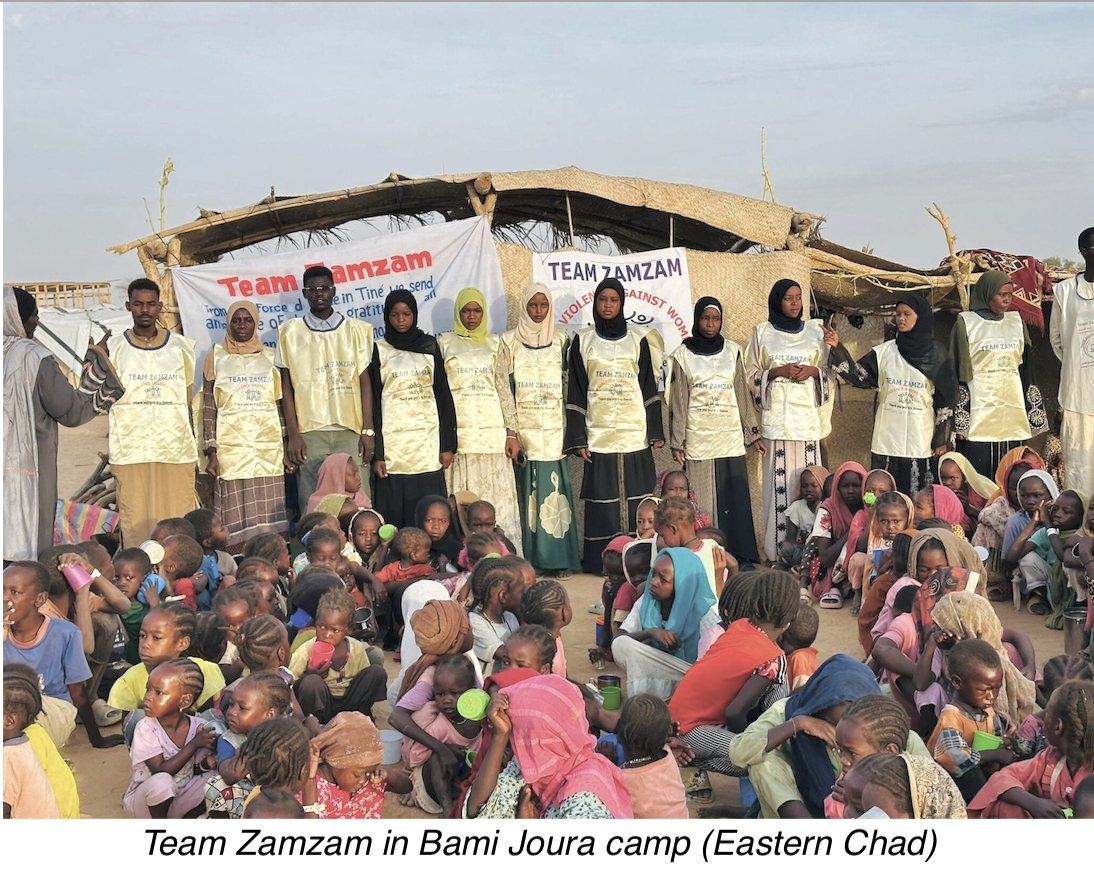
These broader assessments are reflected daily in the work of Team Zamzam’s remarkably resilient Counselors, now serving newly arrived refugees in eastern Chad. Their July field report describe families arriving after exhausting journeys across North Darfur carrying little beyond what they could transport on foot or by donkey cart. Many have experienced repeated displacement, having fled multiple communities as front lines shifted and violence expanded. Food remains scarce. Clean water is often difficult to obtain. Shelter is inadequate. Medical services struggle to meet overwhelming demand. Women and children continue to bear a disproportionate share of these burdens, while community resilience is tested anew with each fresh wave of arrivals. Behind every aggregate statistic lie individual histories of loss. Behind every estimate of displacement stand families attempting to reconstruct ordinary life under profoundly extraordinary circumstances.
The work of Team Zamzam, like that of many humanitarian organizations operating in eastern Chad, reminds us that the humanitarian emergency cannot be measured solely through numbers. It unfolds in countless daily struggles to secure food, protect children, obtain medical care, preserve community life, and maintain dignity amid prolonged uncertainty.
 The Geography of Humanitarian Collapse
The humanitarian crisis is increasingly defined not only by its scale but by its geography.
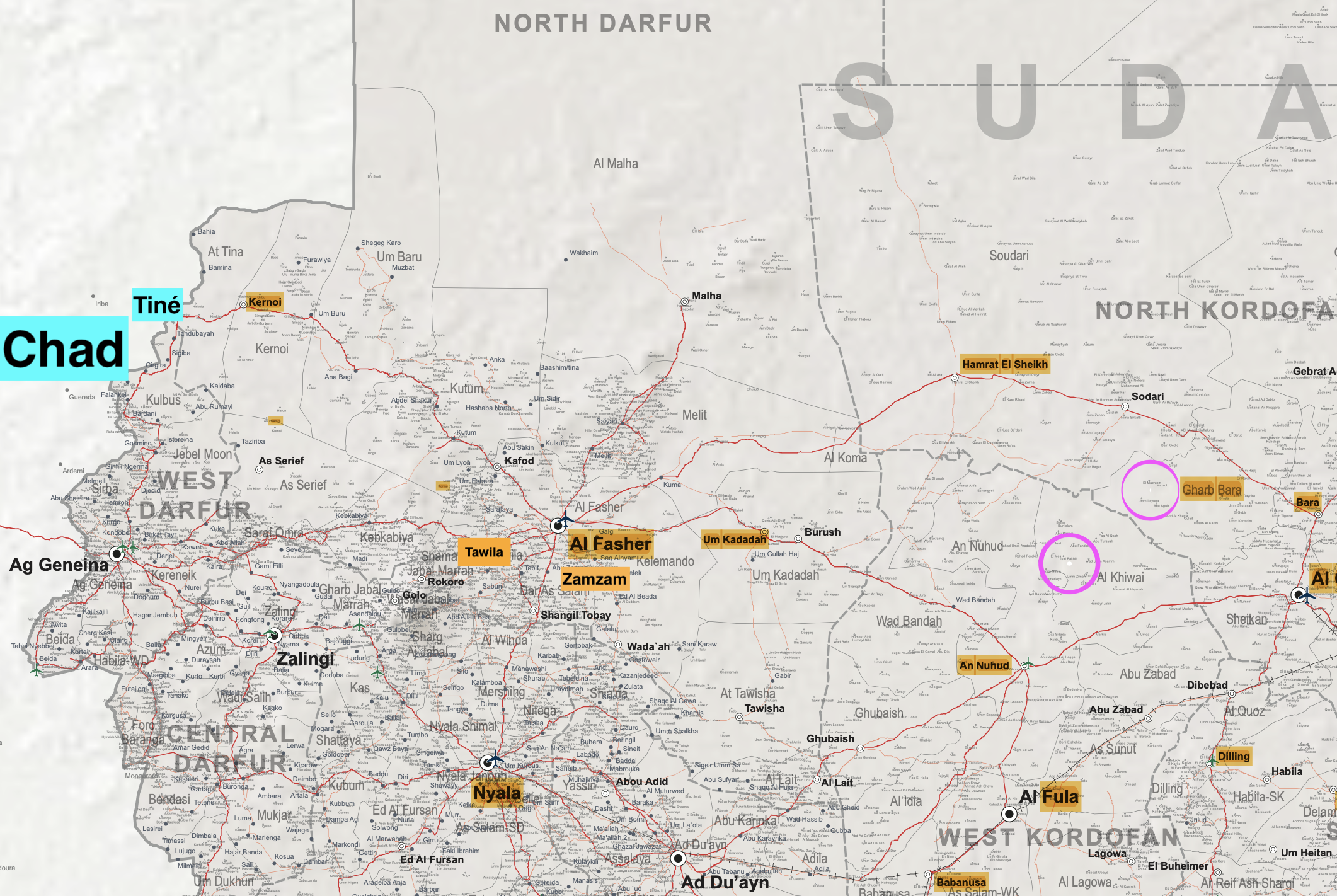
Over the past year, western Sudan has evolved into a single interconnected humanitarian theater extending from besieged El Fasher across Darfur and into the Kordofans. Military developments in one region now reverberate rapidly throughout the others, producing successive waves of displacement while further constraining already fragile humanitarian operations.
El Fasher remains defining of this geography. For more than a year it stood as the last major urban center in Darfur outside Rapid Support Forces control. Its military significance was obvious. Its humanitarian significance was even greater. Hundreds of thousands of civilians were trapped within or around the city under increasingly desperate conditions. The destruction of Zamzam eliminated a principal place of humanitarian refuge for the civilian population, while access to El Fasher itself had almost totally ended. The atrocities following the RSF seizure of El Fasher in October 2025 have been described by UN investigators as genocide.
The conflict has simultaneously intensified across the Kordofans, particularly around El Obeid, whose strategic position astride the principal transportation corridors linking central Sudan with Darfur gives it importance extending far beyond the city itself. Control of El Obeid increasingly influences the movement of humanitarian supplies toward western Sudan. Continued insecurity throughout the region therefore threatens not merely another military front but the logistical foundations upon which humanitarian relief increasingly depends.
The geography of conflict has become the geography of survival.
The Convergence of Evidence
The humanitarian catastrophe unfolding across western Sudan has become increasingly difficult to describe in conventional terms. Military offensives continue. Displacement accelerates. Hunger deepens. Disease spreads. Humanitarian operations struggle under mounting financial and logistical constraints. Yet alongside this convergence of humanitarian crises, another and equally significant convergence has emerged during recent months: the convergence of independent evidence documenting both the character of the conflict and responsibility for many of its gravest crimes.
This development deserves careful attention because it fundamentally changes the context within which Sudan is now understood internationally.
Throughout much of the present conflict, governments reluctant to confront atrocities have often found refuge in uncertainty. Access to large areas of Darfur remained severely restricted. Independent investigations were extraordinarily difficult. Humanitarian organizations necessarily focused on relief rather than criminal investigation. Conflicting narratives, amplified through political and social media channels, created opportunities for delay while additional evidence was sought. Such conditions no longer prevail to the same degree.
Humanitarian organizations have documented the progressive deterioration of civilian life across Darfur and the Kordofans through hundreds of field assessments. Medical personnel have reported the predictable interaction of hunger, disease, and collapsing health services. Satellite imagery has recorded the destruction of villages, displacement sites, agricultural lands, and civilian infrastructure with increasing precision. Sudanese civil society organizations, often working under extraordinary personal risk, have continued to preserve testimony that might otherwise have been lost. Independent conflict-monitoring organizations have established increasingly detailed chronologies of military operations and responsibility for attacks on civilian populations.
These efforts differ in purpose, methodology, and institutional mandate. Yet they increasingly describe the same reality. That convergence has now been reinforced by two developments of particular significance. As noted, the United Nations Independent International Fact-Finding Mission has concluded that the Rapid Support Forces and associated Arab militias committed acts in Darfur amounting to genocide, particularly during and following the assault on El Fasher and the destruction of Zamzam camp.
Independently, the Office of the Prosecutor of the International Criminal Court has announced what it describes as a major breakthrough in investigations into atrocities committed during the present conflict, including evidence extending responsibility beyond individual perpetrators toward higher levels of military command. Neither institution reaches such conclusions casually.
Their mandates differ. Their evidentiary standards differ. Their purposes differ. Yet both now contribute to a growing body of evidence whose broad conclusions increasingly reinforce one another.
The significance extends beyond legal accountability alone. It bears directly upon historical understanding. For the question confronting the international community is no longer primarily one of knowledge.
What We Know
Knowledge remains incomplete, as it always will while war continues. New evidence will emerge. Investigations will deepen. Individual episodes will be more fully reconstructed. Precise mortality figures, as in virtually every modern conflict, will remain contested long after the fighting has ceased.
Yet uncertainty regarding particular events should no longer obscure the broad historical record that has already been assembled. Independent humanitarian organizations, United Nations agencies, Sudanese civil society groups, medical personnel, satellite analysts, journalists, legal investigators, and countless survivors have documented this catastrophe from remarkably different perspectives. Their methods differ. Their institutional responsibilities differ. Their immediate purposes differ.
Increasingly, however, their conclusions converge. The historical record continues to expand in detail. It no longer changes fundamentally in character.
For more than twenty-seven years this website has attempted to document Sudan’s recurring humanitarian catastrophes. Its purpose has never been simply archival. Documentation matters because humanitarian emergencies unfold amid confusion, restricted access, deliberate disinformation, and the inevitable erosion of public attention. Accurate contemporary reporting therefore serves a larger purpose. It preserves evidence while events remain accessible to direct observation rather than retrospective reconstruction.
That purpose has become increasingly important during the present war.
Sudan’s catastrophe is now documented through humanitarian assessments, epidemiological surveillance, satellite imagery, refugee testimony, legal investigation, conflict monitoring, and the daily work of Sudanese organizations whose members continue to record events despite extraordinary personal risk. Future historians will undoubtedly refine this record. They will add important detail. They may revise particular interpretations.
They are unlikely to alter its essential conclusions.
July 15, 2026 | https://wp.me/p45rOG-2Yl
Sources:
World Food Program—July 2026 emergency funding update
United Nations Independent International Fact-Finding Mission for the Sudan
Team Zamzam, July 2026 Field Report
Armed Conflict Location & Event Data (ACLED)
Yale Humanitarian Research Lab (where cited)