
Overview (Eric)
The humanitarian catastrophe in Sudan continues to deepen, even as international attention and the resources available to address it diminish. The designation of Sudan as the world’s greatest humanitarian crisis has lost none of its relevance. Indeed, the situation is becoming increasingly difficult to assess precisely because the capacity of international organizations to monitor conditions, maintain an operational presence, and provide reliable reporting is itself deteriorating. Nowhere is this problem more consequential than in the borderlands of North Darfur and eastern Chad, where the continuing displacement of civilians from Darfur is placing extraordinary pressure on already inadequate humanitarian resources.
What we are witnessing is a terrible convergence of forces that we have been documenting since the summer: the destruction of agricultural production and rural livelihoods; the exhaustion of humanitarian supplies and the contraction of assistance; continuing displacement, often repeated as families are forced to flee more than once; and the pervasive insecurity that determines where civilians can seek refuge. These are not separate emergencies. They are mutually reinforcing developments, each making the others more difficult to address. The consequences are visible on both sides of the Chad–Darfur border. They have been documented here as fully as possible with available reporting sources.
The agricultural situation is particularly ominous. The 2026 rainy season has brought substantial rainfall deficits to important agricultural areas of Sudan, including much of western Sudan. Poor crop establishment, deteriorating pasture and water availability, and declining livestock conditions are compounding the destruction already caused by years of conflict and displacement. The developing El Niño event is an additional concern, although climatic conditions cannot be understood independently of the destruction of agricultural infrastructure, the loss of seed and equipment, displacement from farming areas, and the disruption of markets. The consequences extend beyond the present harvest: families that have lost their productive assets and access to land face increasingly diminished prospects of recovering their livelihoods.
The effects are particularly severe in North Darfur. FEWS-Net’s September 2026 assessment identifies At-Tina, Um Baru and Kernoi among localities where some households face IPC Phase 5, or Catastrophe, conditions. This classification should not be confused with a formal famine determination for an entire locality, but it is nevertheless an exceptionally grave warning. Sudanese reporting from Mershing and other parts of Darfur describes failed sorghum and millet harvests, continuing displacement, and families leaving in search of food, water and medical assistance.
Tawila has become one of the principal destinations for people displaced from several parts of Darfur. The population there is enormous, and the available resources are grossly inadequate. Yet it is important to understand that people are not moving toward Tawila simply because of hunger or the absence of services elsewhere. The presence of forces associated with Abdel Wahid al-Nur provides a degree of perceived physical security that is an important consideration for people fleeing West and Central Darfur. Families may knowingly move into conditions of extreme deprivation because they believe that the alternatives expose them to even greater danger. The geography of displacement is therefore shaped by the geography of insecurity and perceived protection as well as by the availability of food and shelter.
The situation in eastern Chad must be understood within this larger regional catastrophe. The refugee-hosting communities are themselves experiencing food insecurity, rainfall deficits and increasing pressure on limited resources. The existence of food in local markets does not mean that families can obtain it. As the latest information from Team Zamzam’s counselors makes clear, many refugees have virtually no purchasing power. Food is available in Tina, but rising prices and the absence of income make it inaccessible to much of the displaced population. Medical facilities exist, but treatment is frequently unaffordable. The distinction between the physical availability of essential resources and the ability of vulnerable families to obtain them is fundamental to understanding the present emergency.
There is also a disturbing possibility that hunger is beginning to drive some refugees to contemplate returning to areas of Darfur from which they fled. Such movements, if undertaken, could expose them to renewed attacks, abduction and other abuses by Rapid Support Forces (RSF) elements. People who crossed an international boundary in search of safety may find themselves considering a return to the very conditions that forced them to flee, because the resources necessary for survival are unavailable in displacement. This is one of the most troubling implications of the present situation.
The international humanitarian response is increasingly inadequate. Funding reductions, depleted emergency stocks, logistical difficulties and insecurity have all diminished the capacity of agencies to respond. On November 6, a UN briefing reported that between 13.4 and 15.4 million people in Sudan urgently require emergency shelter, while only approximately 35 percent of the $179 million requested for the collective shelter response had been funded. IOM reported that its warehouses in Sudan were empty and that its last available supplies had been dispatched in a convoy of 16 trucks to Darfur. Despite inquiries through experienced humanitarian contacts, we have been unable to establish the convoy’s destination or the populations it was intended to serve. We cannot assume that these supplies reached North Darfur or the Tina–Tiné border region.
The distinction between institutional presence and effective humanitarian assistance is particularly important in the Tiné area. Team Zamzam counselors report the presence of WFP, UNHCR, UNICEF, IOM, OCHA, WHO and UNFPA, in addition to local charitable and community organizations. Yet they describe the impact of these interventions on the daily lives of refugees as limited and report growing frustration and declining confidence in the ability of UN agencies to meet their needs. We should distinguish between an agency’s presence, its actual operational activities and the assistance reaching particular settlements. But the discrepancy between the institutional presence and the assistance refugees experience is a matter of serious concern.
This is also an increasingly difficult emergency to document. Reliable, geographically specific information from North and West Darfur is scarce. International assessments often aggregate conditions across enormous areas, while the experience of individual settlements may be considerably worse than regional averages suggest. The absence of adequate reporting must not be mistaken for an absence of need.
It is in this context that the work of Team Zamzam assumes particular importance. Now beginning its seventh year of humanitarian operations, the Team continues to work directly with vulnerable refugees in Bami-Jura, just southwest of Tiné. Its women counselors have developed an unusually intimate understanding of the displaced population through more than six years of sustained engagement and repeated assessment missions. They are recognized by many refugees as trusted intermediaries and an important conduit for information. Their accumulated knowledge, cultural fluency and continuous presence provide a depth of understanding that occasional external assessments cannot readily reproduce. Although their observations are not statistically representative surveys, they constitute a valuable and independently important source of humanitarian intelligence.
The Team’s own report for October–November [ here ] provides a detailed account of its activities, the needs it has identified, and the circumstances of the people it serves. What follows is a summary of that work.
Team Zamzam Activities During the Reporting Period
Population and Continuing Arrivals
The counselors estimate that approximately 7,000–9,000 refugees are currently in the area, although they emphasize that accurate population figures are difficult to obtain. New arrivals continue daily, many fleeing attacks in the Muzbad area of Dar Zaghawa and surrounding areas of northern Darfur approximately two weeks before the counselors’ assessment.
This continuing movement is important. It demonstrates that displacement into eastern Chad is not simply the residual consequence of earlier offensives. People are still fleeing current violence, and the population requiring assistance continues to change.
Food and Essential Household Assistance
During the reporting period, Team Zamzam distributed food baskets and essential supplies to 173 households, comprising 846 individuals. Assistance included basic food commodities and household necessities intended to reduce immediate pressures on families with little or no income.
The Team also continued its breakfast programme for children, providing meals over four consecutive days and reaching 2,731 children during the reporting period.
These interventions are modest in relation to the overall need, but they are essential to families who otherwise have few dependable sources of assistance.
Education and Community Support
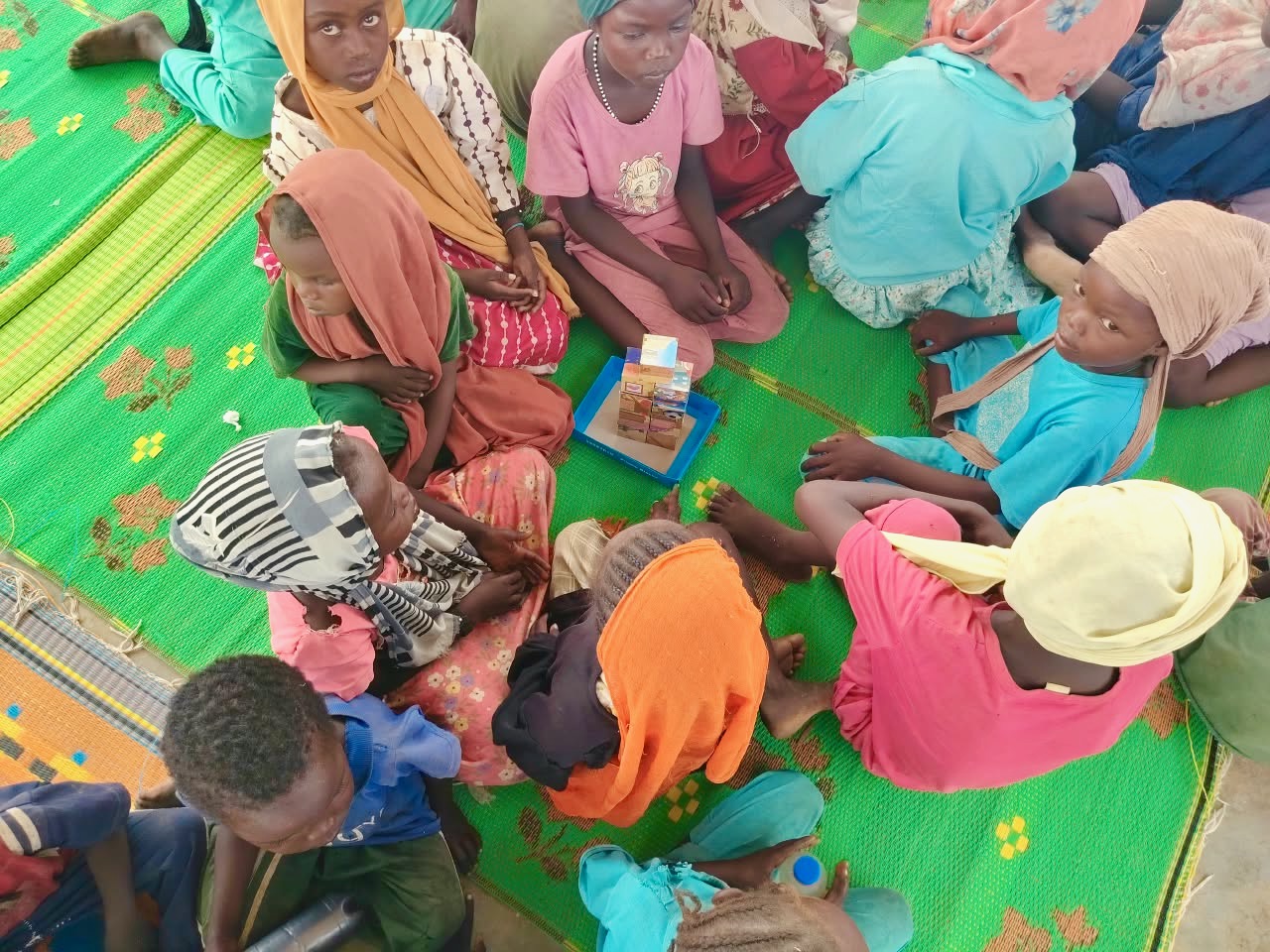
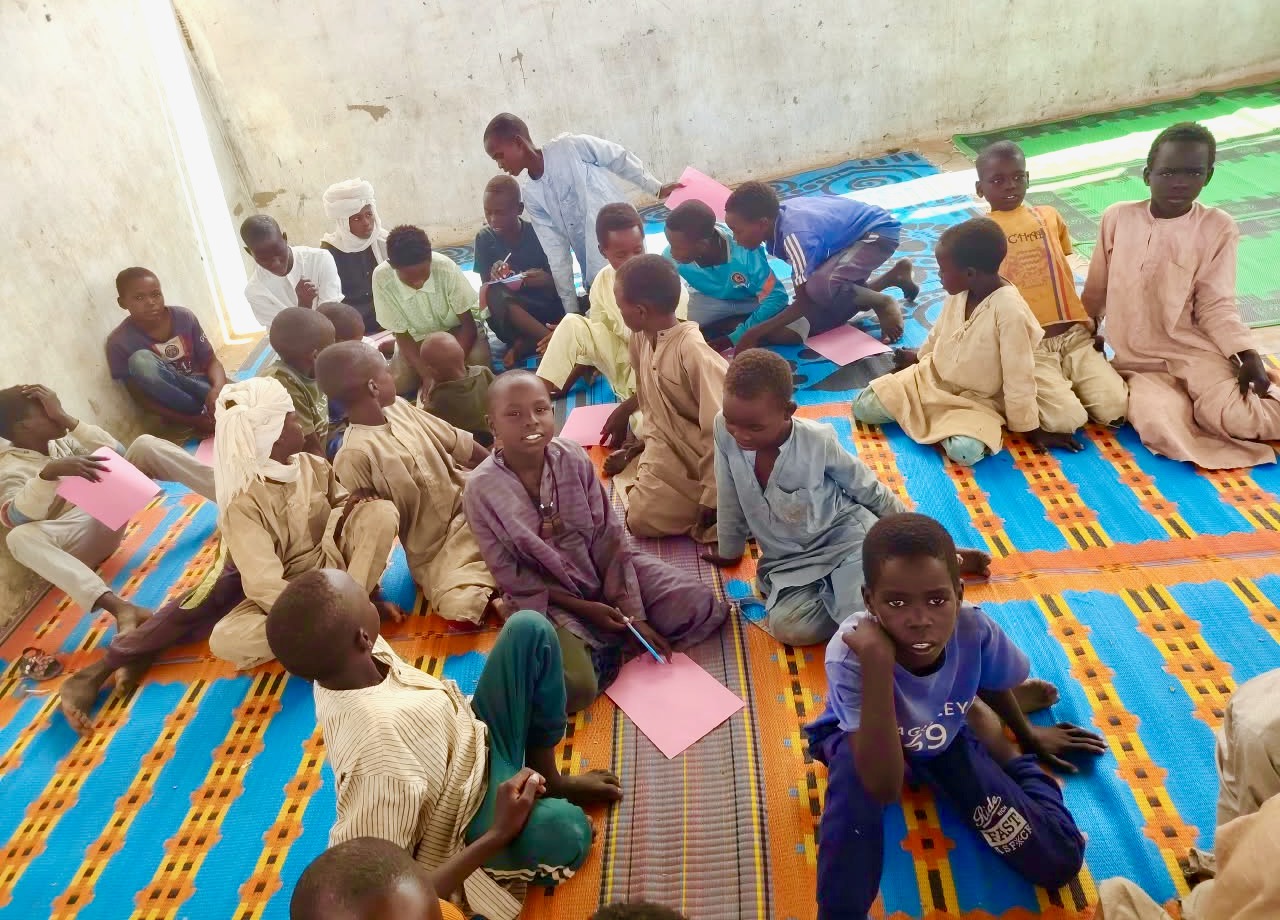
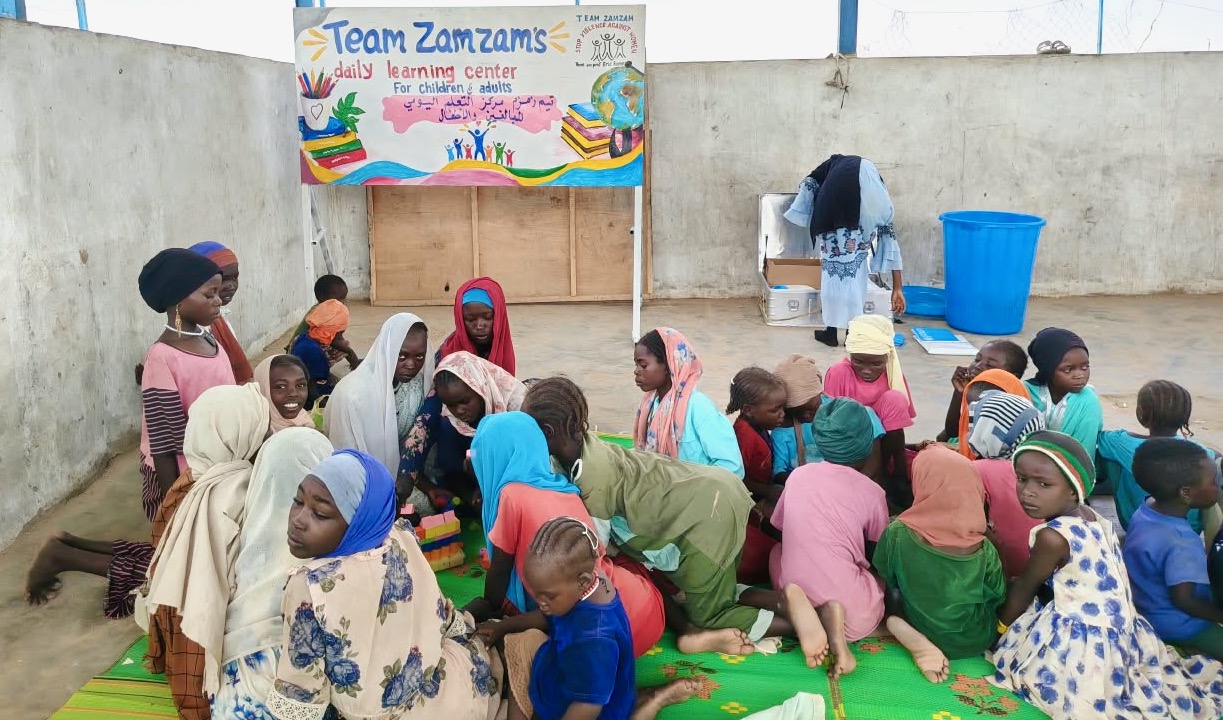
Team Zamzam continues to support its community educational programme, which has become an important part of life in Bami-Jura. More than 150 children attend morning classes, while approximately 60 adults participate in evening literacy sessions. The programme operates six days each week and has become extremely popular within the camp, confronting an unfortunately large waiting list.
In circumstances where displacement has disrupted family life, schooling and ordinary community structures, the continuation of education provides more than instruction. It helps preserve a measure of stability and social connection for children and adults whose lives have been profoundly disrupted.
Team Zamzam counselors and the volunteers attracted to the programme are extremely enthusiastic about the possibilities going forward.

Psychosocial Support and Protection
The counselors continue to provide psychosocial assistance, basic guidance, emotional support and follow-up for vulnerable individuals and families. Particular attention is given to survivors of sexual violence and women facing serious protection and reproductive-health challenges.
The latest report documents cases requiring specialized medical and psychosocial intervention, including conflict-related sexual violence and obstetric fistula. These cases illustrate the devastating consequences of violence, displacement and inadequate access to medical care. The identities of survivors and other sensitive details are withheld in the interests of their safety and dignity.
The Team also reports serious protection concerns affecting the wider refugee population, including attacks, looting, killings, abductions and detention for ransom. These reports underscore the need for effective protection mechanisms and safe referral services.
Additional Information from the Counselors: Conditions in the Tiné Area
In response to questions about the current humanitarian situation, Gaffar obtained further information from one of the Team’s counselors.
Food security: Food is available in local markets, but most refugees cannot afford to purchase it. The principal staple is acida, a traditional Sudanese porridge. Families occasionally consume red lentils, while some can purchase rice and pasta when resources permit. Severe shortages of purchasing power, rather than the complete absence of market commodities, are central to the present food-security crisis.
Health and nutrition: A significant number of children are reportedly suffering from malnutrition. Tina has several private clinics and some medical services, but most refugees cannot afford the treatment they urgently need. Humanitarian assistance remains far below the level required to address the needs.
Humanitarian organizations: The counselor identifies WFP, UNHCR, UNICEF, IOM, OCHA, WHO and UNFPA as present in the area, alongside local charitable and community-based organizations. Nevertheless, the counselor describes their impact on refugees’ lives as limited. These observations reflect local experience and perceptions; they do not establish that every agency is inactive or that no assistance is being delivered.
Security and protection: The situation remains extremely fragile. The counselor reports continuing threats from drone strikes and RSF ground attacks, including previous occasions when RSF forces crossed into Tina on the Chadian side of the border. These reports require further independent corroboration, but they are a serious indication of the insecurity affecting the immediate border region.
Perhaps most disturbing is the report that some refugees are considering returning to parts of Darfur in search of food and other necessities because conditions in displacement have become so difficult. Such movements would expose them to renewed protection risks, including attacks and abductions.
The counselor’s account reinforces a central conclusion of this update: crossing the border does not necessarily mean escaping the conditions that threaten survival.
The Work of Team Zamzam: An Essential but Inadequate Response to Overwhelming Need
Team Zamzam continues to provide food assistance, breakfast for children, education, psychosocial counseling and protection support. Its work is made possible by the dedication of its counselors and the continuing commitment of those who support the project.
But the scale of need is vastly greater than the resources available to the Team. The assistance provided to 846 people through food distributions during this reporting period cannot substitute for sustained food assistance to a population estimated at 7,000–9,000. Nor can the Team’s educational and counseling programmes replace the medical, nutritional, shelter and protection services required throughout the settlement.
The situation demands a substantially greater response from international agencies and humanitarian donors. Food assistance must be adequate and regular; healthcare must be financially accessible; children suffering from malnutrition must receive appropriate treatment; and women and girls exposed to violence must have access to confidential, survivor-centered medical and psychosocial services.
The work of Team Zamzam demonstrates what sustained, locally grounded humanitarian engagement can accomplish. It also demonstrates how much remains undone.
The Continuing Appeal
The humanitarian emergency in Sudan and eastern Chad is not receding. Agricultural failure, continuing displacement, insecurity and the contraction of humanitarian assistance are combining to create conditions in which families are increasingly unable to sustain themselves. The possibility that people may return to areas of active danger because they cannot obtain food in displacement is a particularly grave warning.
We ask our supporters to continue helping Team Zamzam provide food, education, counseling and essential assistance to the people of Bami-Jura. Contributions, however modest, make a direct difference to the lives of vulnerable families.
It remains possible to make a tax-deductible contribution to Project Zamzam through our fiscal partner, Operation Broken Silence, a US 501(c)(3) organization. OBS works primarily on health and education issues in the Nuba Mountains of South Kordofan and has established a dedicated contribution portal for Project Zamzam.
The complete Team Zamzam monthly report, including its detailed humanitarian assessment and operational observations, may be found here:
We are deeply grateful to everyone who continues to support this work. In circumstances where the needs are so great and the international response so inadequate, the continued commitment of individual supporters makes an indispensable difference.
Eric Reeves
Project Co-Chair, Team Zamzam
For further information on Eric Reeves’s work on Sudan, see www.sudanreeves.org.
Another way to support Team Zamzam:
Every woodturning has two stories:
Purchases of Eric Reeves’s woodturnings help provide meals and other assistance to vulnerable people in Darfur. Each piece carries its own story, and each purchase helps write another.
https://www.ericreeves-woodturner.com/
