WFP Condemns Deadly Attack on Food Aid Convoy in South Kordofan as Sudan Doctors Network Identifies UAE-Backed Rapid Support Militia Drones as Responsible
Sudanese Echo: https://x.com/sudaneseecho/status/2106790022443581921?s=66&t=jJGKIyjKIpmou6ZSZAlnTA
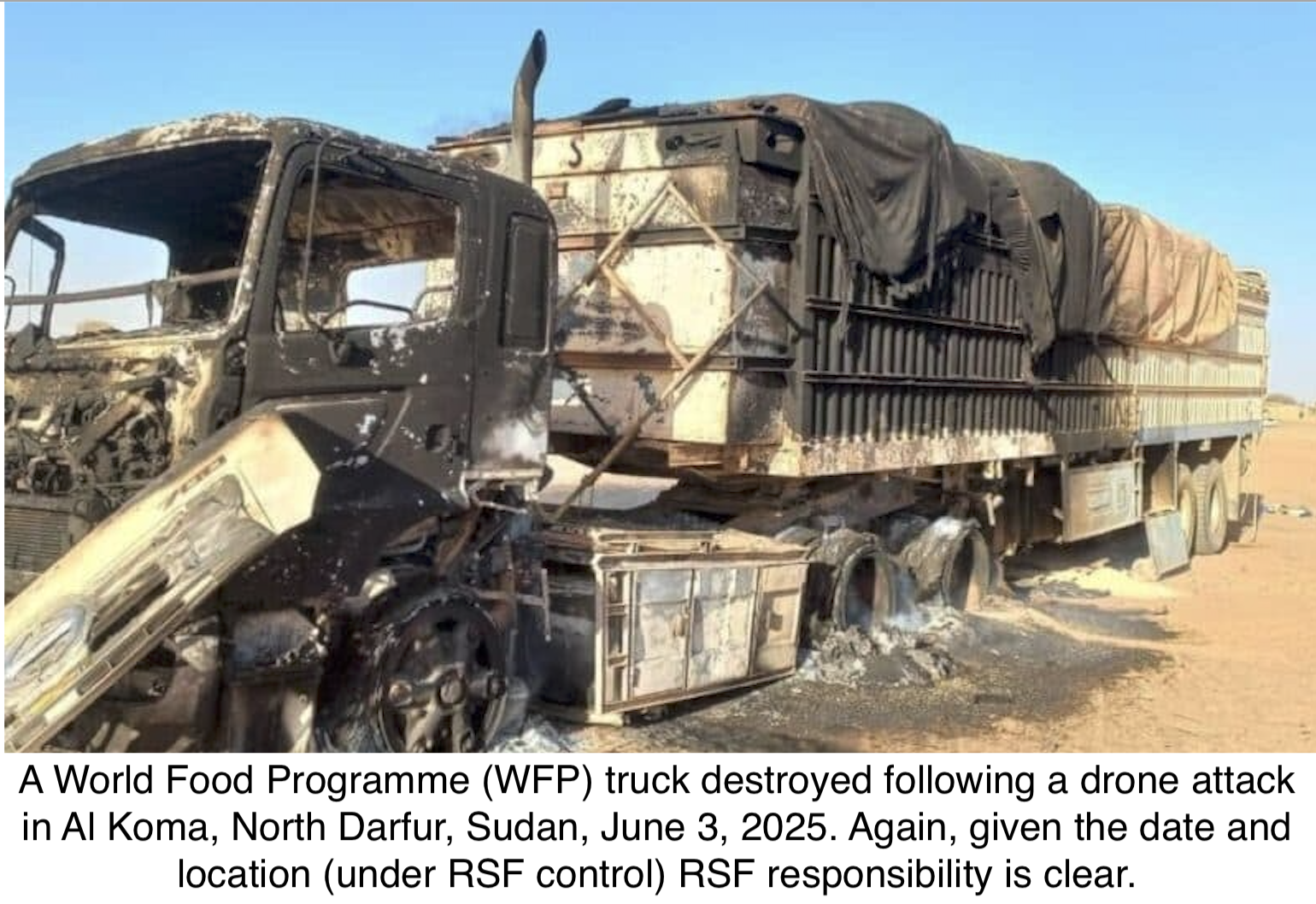
The United Nations World Food Programme has strongly condemned an airstrike on two contracted trucks carrying food assistance in South Kordofan in the early hours of Saturday, October 3, 2026, killing one driver in the latest attack to threaten humanitarian deliveries to civilians in the state.
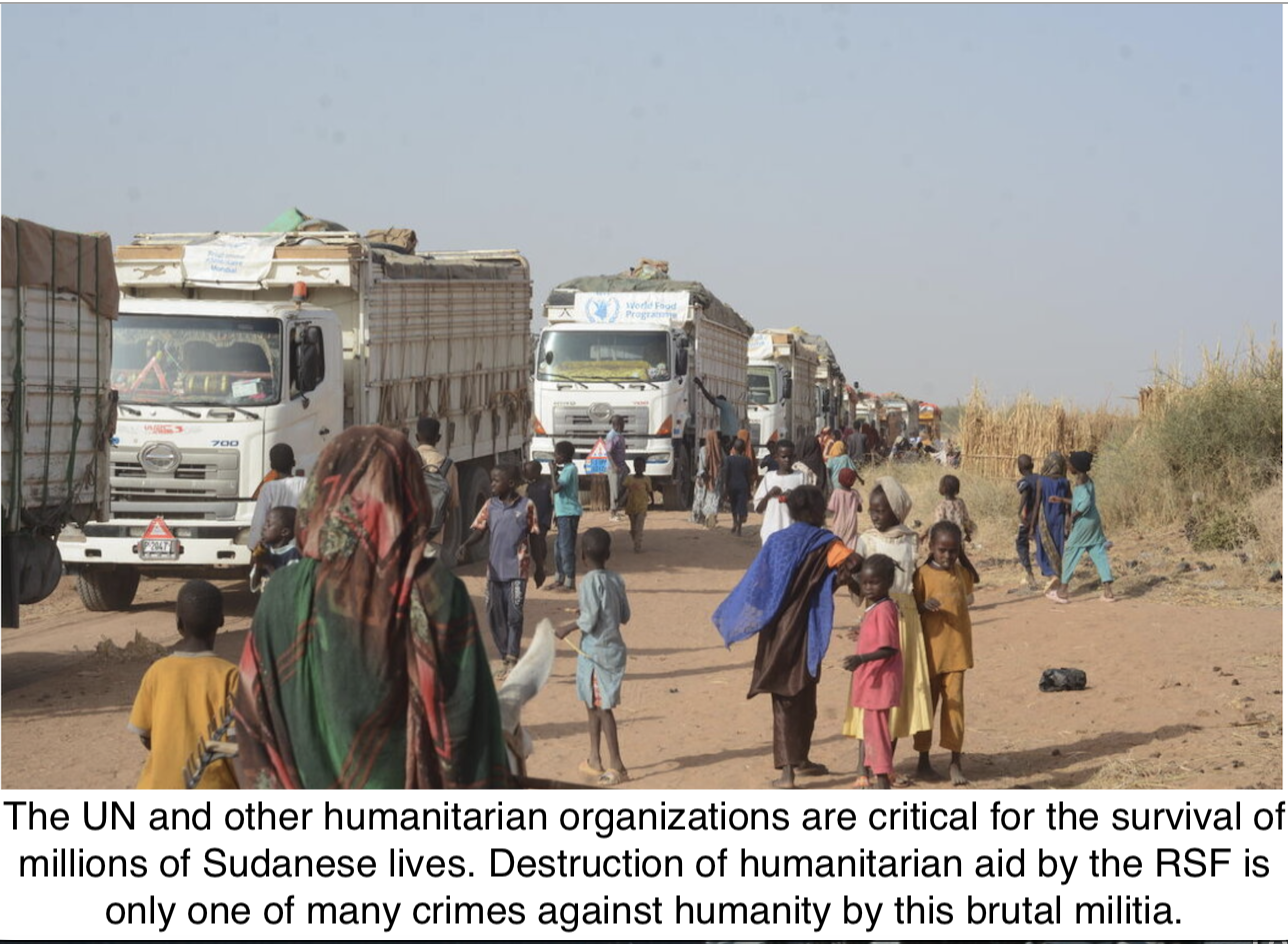
In a statement issued on October 4, WFP said the two trucks were travelling from Dilling to Kadugli carrying WFP food commodities and were clearly marked as humanitarian vehicles. The agency said additional information about the circumstances of the attack, including the extent of damage to the food cargo, was still being collected. WFP expressed its condolences to the family, friends and colleagues of the driver who was killed and called for a prompt and impartial investigation into the incident, with those responsible for any violations held accountable.
The agency also noted that the attack came just one day after another WFP truck struck an explosive device in Dilling after delivering life-saving food assistance. WFP said the two incidents underscored the increasingly difficult security environment in Sudan and the risks aid workers face while delivering assistance to communities in need. WFP urged all those involved in the hostilities to respect their obligations under international humanitarian law, protect civilians and civilian infrastructure, and ensure the safe and unimpeded movement of humanitarian personnel and cargo.
It said it remained committed to delivering life-saving assistance to millions of women, men and children who depend on humanitarian support across Sudan.
WFP did not identify the party responsible for the October 3 airstrike. The Sudan Doctors Network, however, said in a separate statement on the same incident that the attack was carried out by drones operated by the Rapid Support Militia and struck the trucks while they were transporting food aid from Dilling to Kadugli. The network said one driver was killed and three others were injured. The Sudan Doctors Network said attacks on humanitarian assistance and the vehicles carrying it represent a serious violation of international humanitarian law and endanger thousands of civilians by disrupting access to food and relief supplies.
It added that attacks on humanitarian workers undermine efforts to ease civilian suffering and further deepen the humanitarian crisis. The network said the strike formed part of what it described as a recurring pattern of attacks on relief convoys and humanitarian assistance in areas under Rapid Support Militia control or within range of its operations. It called on the United Nations and international humanitarian and rights organizations to open an independent and transparent investigation, identify those responsible and publish the findings, while taking urgent measures to protect humanitarian convoys and aid workers.
The October 3 strike was not the first attack on relief shipments along the Dilling-Kadugli route. On August 30, two trucks carrying WFP food supplies were hit outside Dilling while travelling toward Kadugli. More than 50 tonnes of food were destroyed, enough to support around 5,800 people for one month. WFP confirmed the attack, while the Sudan Doctors Network attributed responsibility to the Rapid Support Militia.
In February, another relief convoy heading toward Dilling and Kadugli was struck by drones. The Sudan Doctors Network said the Rapid Support Militia and its allied SPLM-North faction led by Abdelaziz al-Hilu were responsible. Three aid workers were killed and four others injured.
 These incidents come as the Sudanese government keeps the Adré border crossing with Chad open through December 31, 2026, allowing one of the most important humanitarian routes into Darfur to continue operating. The government said the extension was intended to facilitate relief deliveries and strengthen cooperation with UN agencies and humanitarian organizations, while also emphasizing monitoring, oversight and transparency at the crossing.
The repeated attacks on aid convoys show that opening border routes does not by itself guarantee humanitarian access, because trucks and aid workers still have to reach their final destinations safely. WFP has previously documented the detention of around 40 aid trucks by local Rapid Support Militia officials after they crossed from Chad through Adré in late 2024 and early 2025, delaying assistance for weeks to areas facing famine or the risk of famine.
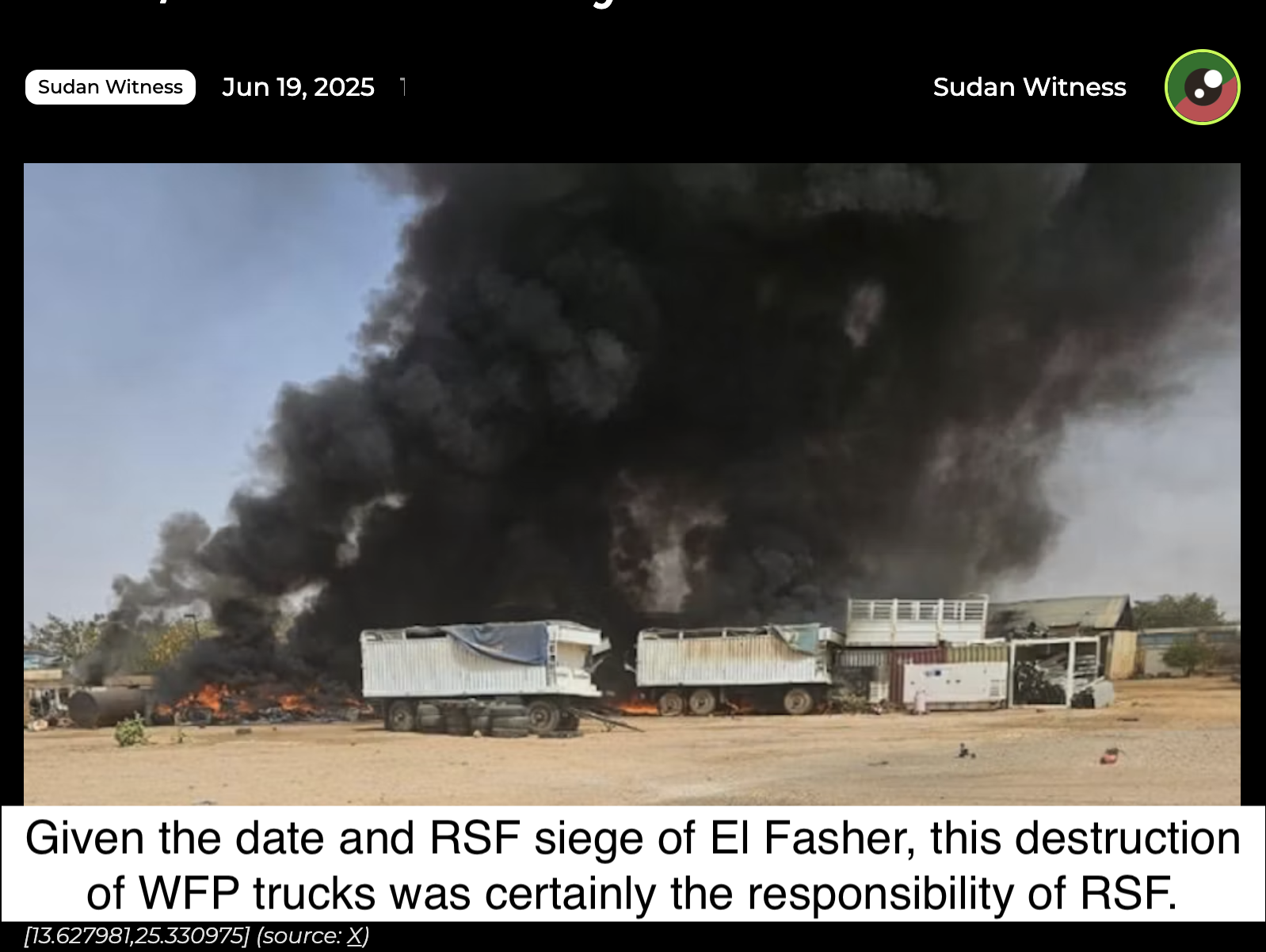
Other humanitarian organizations have also documented looting, obstruction and attacks affecting relief facilities and supplies intended for civilians.
On September 28, Dr. Amgad Fareid Eltayeb said the UAE-backed Rapid Support Militia seized and looted a WFP convoy carrying life-saving food for civilians in North Darfur. He said the incident came after the Sudanese government had spent August and September approving expanded humanitarian deliveries and facilitating greater access to the region. Fareid said the government was opening humanitarian routes while the militia was seizing aid at gunpoint, and he called for accountability for those obstructing and looting relief supplies.
The latest incidents also come amid mounting evidence of external support benefiting the Rapid Support Militia, including networks linked to the United Arab Emirates.
The latest report by the UN Independent International Fact-Finding Mission for Sudan referred to individuals, entities and networks connected to the UAE that were involved in activities from which the militia benefited. Sudanese Echo also previously obtained a copy of a leaked UN Panel of Experts report examining routes and networks of external support linked to the Rapid Support Militia.
The UAE continues to deny providing military support to the militia. The October 3 attack highlights the dangers facing humanitarian assistance even after food has been loaded, approved for delivery and placed on the road to communities in need. For civilians in South Kordofan and elsewhere in Sudan, the safety of aid workers, trucks and supply routes remains critical to whether life-saving food actually reaches the people it is intended to serve.
See also:
Posting on Instagram by Sudan Doctors Network, October 5, 2026