Overview (Eric)
The situation on the ground in Darfur, eastern Chad, and Sudan more broadly, remains perilous in the extreme for civilians. The designation “world’s greatest humanitarian crisis” has not lost any of its relevance, however obscured this reality may be by the metastasizing U.S./Israeli war on Iran, Russia’s savage war on Ukraine, impending U.S. elections, the explosive effects of climate change, and the crisis that has brought the world face to face with the possibility of an Artificial Intelligence apocalypse.
But even amidst an incomprehensibly dangerous moment in world history, we cannot lose sight of individual suffering and death, and the responses that may assist in diminishing that suffering and forestalling at least some deaths. It is with this in mind that the current update on the work of Team Zamzam in Tiné (eastern Chad) is offered.
The massive underfunding of humanitarian operations in Sudan and eastern Chad is directly due to reductions in contributions from wealthy nations that have traditionally provided the resources for both the UN and INGOs. European countries have cut back funding, although the savage cuts to the US Agency for International Development (USAID) under the Trump administration have been the cruelest blow. Doctors Without Borders/ Médecins Sans Frontières (MSF) has recently (September 8) warned that “the UN’s $2.87 billion response plan is barely 41-percent funded, and the World Health Organization estimates that 37 percent of Sudan’s health facilities are completely out of service.” These are shameful figures, and they do not stand alone.
This makes the work of Team Zamzam—now beginning its seventh year of humanitarian operations—all the more important. Although small and working primarily in the Bami Jura transit refugee camp just to the southwest of Tiné, they are not only extraordinarily efficient in responding to the particular needs of a transit camp, they are some of the best eyes and ears on the ground and see what is and isn’t being done. Their own work over the past month is detailed below; and at my request they have provided a detailed overview of the presence of UN agencies and INGOs in the Tiné area, as well as a comprehensive humanitarian assessment, security analysis, and case histories. Translated by Gaffar, it may be found here.
Team Zamzam has continued to feed, shelter, counsel, and participate in the organization of Bami Jura, adopting their skills and training to the particular needs of a transit refugee camp very near the Chad/Darfur border. As of this update, Team Zamzam estimates the camp population as:
* Number of children: 3,721
* Number of elderly people: 984
* Number of women and girls: 2,120
Large numbers of refugees, particularly from the Dar Zaghawa region of North Darfur, continue to cross regularly into Bami Jura. Rapid Support Forces (RSF) violence is the engine of displacement, a displacement increases the risk of spreading cholera. A return of cholera in the refugee camps of eastern Chad would be a disaster unto itself, as demonstrated by the cholera outbreak in the region last summer:
“Aid agencies have launched an emergency vaccination campaign to reach tens of thousands of people in Sudan’s North Darfur state as the country battles a worsening cholera outbreak alongside fresh displacement, the United Nations said on Wednesday.” (Sudan Tribune, September 9, 2026 (UNITED NATIONS)
Team Zamzam Activities During the Reporting Period (Mid-August – Mid-September)
Team Zamzam is one of the teams operating directly inside Bami Jura camp and continues to monitor developments and support vulnerable refugees on an ongoing basis. The team regularly follows the arrival of new refugees and provides assistance intended to reduce immediate household pressure.
Food and Essential Household Assistance
During the reporting period, Team Zamzam distributed basic food and household items as follows:
Sugar – 50 kg bags 8
Milk – 25 kg bags 6
Cooking charcoal – 8 bags
Cooking oil – 4 jerrycans × 27 each
Tomatoes – 14 cartons
Onions – 2 bags × 100 each
Pasta – 10 nets/packages
Biscuits – 40 cartons
Salt – 1 carton
********************
Buckets – 80
Plastic sheeting/tarpaulins – 67
Sleeping mats – 40
(Quantities are presented as recorded by Team Zamzam and may require clarification of individual packaging or unit measurements for future reporting—Gaffar.)
Emergency Response Following the Storm
[the region is still in the midst of the rainy season, although the rains have been generally very poor—an ominous sign for what looks like a largely failed fall harvest—ER]
Following the recent storm, Team Zamzam also provided assistance to families affected by heavy rainfall, dust, and strong winds. The response focused on helping affected households meet immediate shelter and household needs following the destruction or damage of temporary structures and personal belongings.
Psychosocial and Social Support
In addition to material assistance, Team Zamzam provides:
- Psychological and social support to survivors of sexual violence.
- Basic guidance and counselling.
- Humanitarian awareness and practical advice.
- Emotional support to families experiencing severe hardship, loss, and displacement.
- Follow-up with affected households.
- Monitoring of emerging humanitarian and protection needs.
- Advocacy for additional humanitarian support and urgent intervention from relevant organizations.
Beneficiary Reach and Key Achievements
During the reporting period, Team Zamzam reached vulnerable refugees through food assistance, nutrition support, and psychosocial services.
Food Assistance
A total of 372 households, comprising 1,623 individuals, benefited from the distribution of basic food supplies.
Morning Breakfast Programme
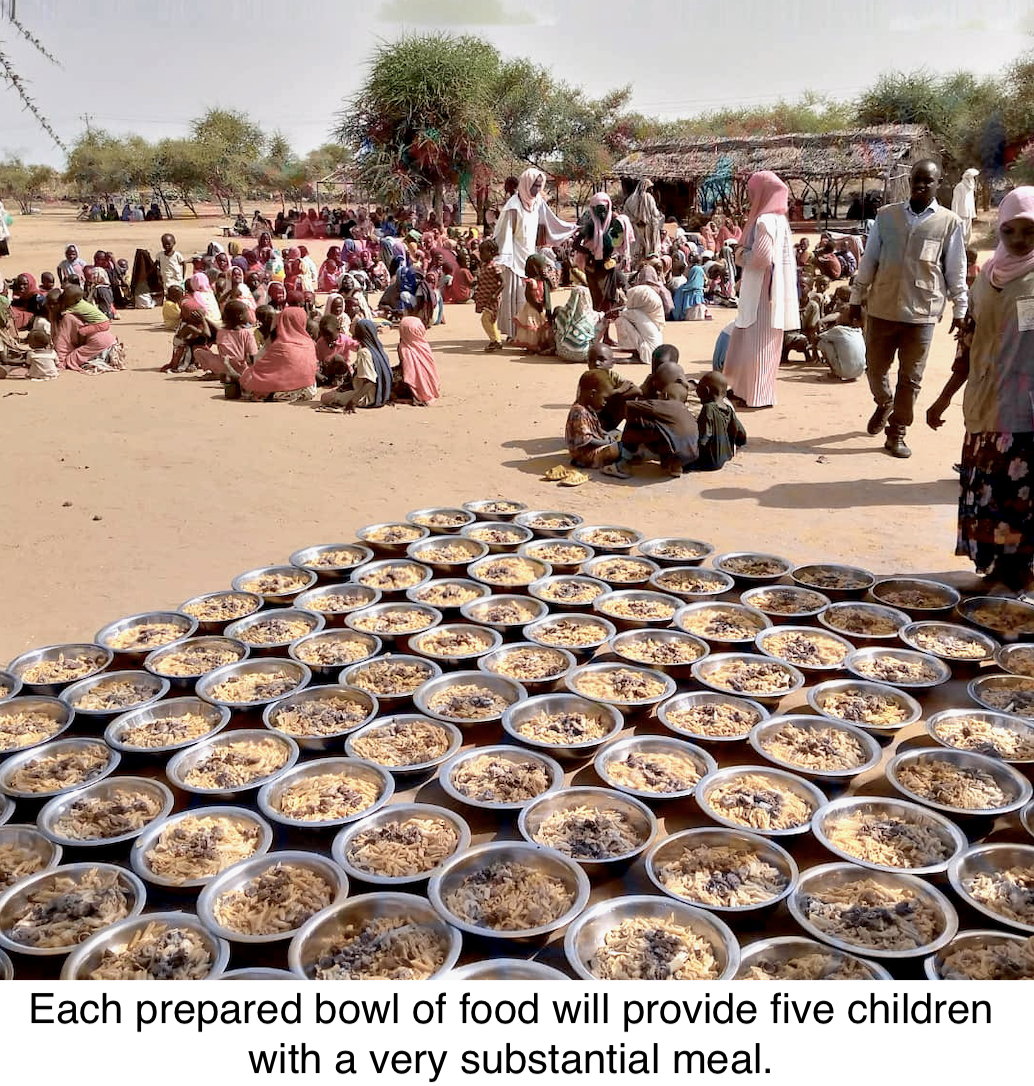
A total of 2,524 children benefited from the morning breakfast programme, supporting their access to nutritious food and contributing to their health and well-being.
Psychosocial Counseling
A total of 44 individuals participated in psychosocial counseling sessions, providing access to essential psychological support and contributing to the mental well-being of survivors of sexual violence and other vulnerable individuals.
Beneficiary Testimonies
Testimony 1 — Father Who Lost His Children
One young father who lost children during the recent weather disaster described the devastating impact of the storm. According to his account, heavy rainfall accompanied by strong winds caused a shelter to collapse and roofing materials to be blown away, resulting in deaths and injuries among residents.
He reported that several people were injured and that children from his own family were among those who died. Another child sustained a serious head injury and was receiving treatment at a hospital. The father explained that his family had already spent more than four months in the camp, living under constant fear and psychological distress. He expressed frustration over what he described as inadequate follow-up of temporary shelters and insufficient humanitarian services, particularly regarding transportation and relocation to established camps. He stated that his family had already lost almost everything as a result of the war and had now suffered another devastating loss in the refugee camp.
Testimony 2 — Female Survivor
A woman who lost children in the disaster described humanitarian services in the camp as extremely slow. She explained that although refugee committees may provide initial reception and registration when people arrive, many families subsequently experience limited follow-up and inadequate access to essential services.
She called for urgent intervention and greater attention to the rights, dignity, safety, and protection needs of refugees.
Survivor Protection Case
CONFIDENTIAL PROTECTION CASE
To protect the survivor’s privacy and dignity, identifying information has been limited and the survivor is referred to only by the initials [F.A.M.].
The Team Zamzam documented the case of a 17-year-old girl originally from Al-Fasher, Al-Nasr neighbourhood. Following the escalation of the conflict, she and her mother attempted to leave the city in search of safety. While travelling towards the Qurna area, approximately 20 kilometres northeast of Al-Fasher, they reported encountering armed individuals associated with the Rapid Support Forces (RSF), who were reportedly involved in robbery and attacks against civilians fleeing the area.
The girl became separated from her mother and was subsequently subjected to sexual violence and physical assault. She was also stabbed in her right hand and left in a severely distressed condition. She was later assisted by acquaintances and eventually reached Qurna before continuing her journey towards refugee camps in eastern Chad.
She is currently in Bami Jura camp and is experiencing severe psychological distress. Team Zamzam has provided psychosocial and social support while continuing to monitor hersituation and protection needs. This case highlights the severe protection risks faced by women and girls fleeing conflict and underscores the urgent need for survivor-centred protection services, psychosocial support, healthcare, safe referral mechanisms, and confidential case management. All information concerning this case should be treated as strictly confidential.
Obstetric Fistula Case
CONFIDENTIAL PROTECTION AND HEALTH CASE
Team Zamzam has also observed serious reproductive-health challenges among displaced and refugee women and girls, particularly among young first-time mothers. One case concerns a young woman identified as [A.M.S.], who was approximately 20 years old at the time of her first pregnancy. She reportedly went into labour outside a healthcare facility while travelling between Al-Fasher and Tawila.
The baby died shortly after birth, and the mother subsequently developed an obstetric fistula, a serious childbirth-related medical condition requiring specialized treatment. The woman’s husband had also reportedly been killed during the conflict in Al-Fasher before the family was displaced.
Her experience demonstrates the devastating intersection of armed conflict, displacement, limited access to skilled maternal healthcare, and inadequate access to specialized medical services. Urgent access to specialized fistula treatment, maternal healthcare, psychosocial support, and long-term rehabilitation is required for women living with obstetric fistula.
All information concerning this case should be treated as strictly confidential and shared only through appropriate protection and medical referral channels.
**********************
Again, the full Team Zamzam assessment report and camp overview may be found here.
I again take the opportunity to remind our supporters that it is now possible to make a tax-deductible contribution to our project, using a portal on the website of a 501/c/3 organization operating in Sudan. Operation Broken Silence, our fiscal partner, works primarily on health and education issues in the Nuba Mountains of South Kordofan; OBS has created a special site for tax-deductible contributions to our project, and we hope this makes contributing to the health and well-being of the people served by Team Zamzam easier for donors.
Another way to support Team Zamzam: every woodturning has two stories!

This page shows many more photographs of Team Zamzam assisting children in need: