TEAM ZAMZAM: MONTHLY HUMANITARIAN REPORT
Reporting Period: Mid-July to Mid-August 2026
Location: Bami-Jura Refugee Camp, Tina (Tiné), Chad
From the coordinating counselors; translated by Gaffar Mohammud Saeneen
-
Introduction
This monthly report of Team Zamzam covers the period from mid-July to mid-August 2026. It provides an overview of the humanitarian situation, living conditions, security challenges, health concerns, and humanitarian activities affecting Sudanese refugees residing in Bami-Jura Refugee Camp in the Tina (Tine) area of Chad.
It is deeply painful to witness, hear about, and document the suffering experienced by civilians affected by the ongoing conflict in Darfur, particularly in North Darfur and surrounding areas. The continuing war has caused immense suffering among civilians who have no involvement in, or benefit from, the conflict.
Hundreds of thousands of people have been forcibly displaced from their homes as a result of violence, killings, abductions, and financial demands that most families are unable to meet. Civilians have been subjected to levels of pressure, deprivation, and suffering far beyond their capacity to cope.
Recent developments across areas of Dar Zaghawa have resulted in the forced displacement of people from villages and towns toward neighbouring countries, particularly Chad. Civilians have reportedly been driven from their homes through various forms of warfare, including drone attacks and gunfire, as well as the reported use of weapons prohibited under international law. Homes have been burned, while money, livestock, food, and other essential belongings have reportedly been looted.
Many displaced people have been left without adequate shelter, food, or clean drinking water and are forced to survive under trees or in open areas. Despite the severity of these conditions, significant gaps remain in the availability and timeliness of humanitarian assistance.
-
Living Conditions in the Camp
During the reporting period, the humanitarian situation affecting communities from Am Burro (also Um Baru) and Kornoy (also Kernoi) localities continued to deteriorate. Repeated attacks have reportedly forced thousands of civilians to flee their villages and seek safety in valleys and other remote areas to protect themselves from killings, violence, humiliation, and sexual violence.
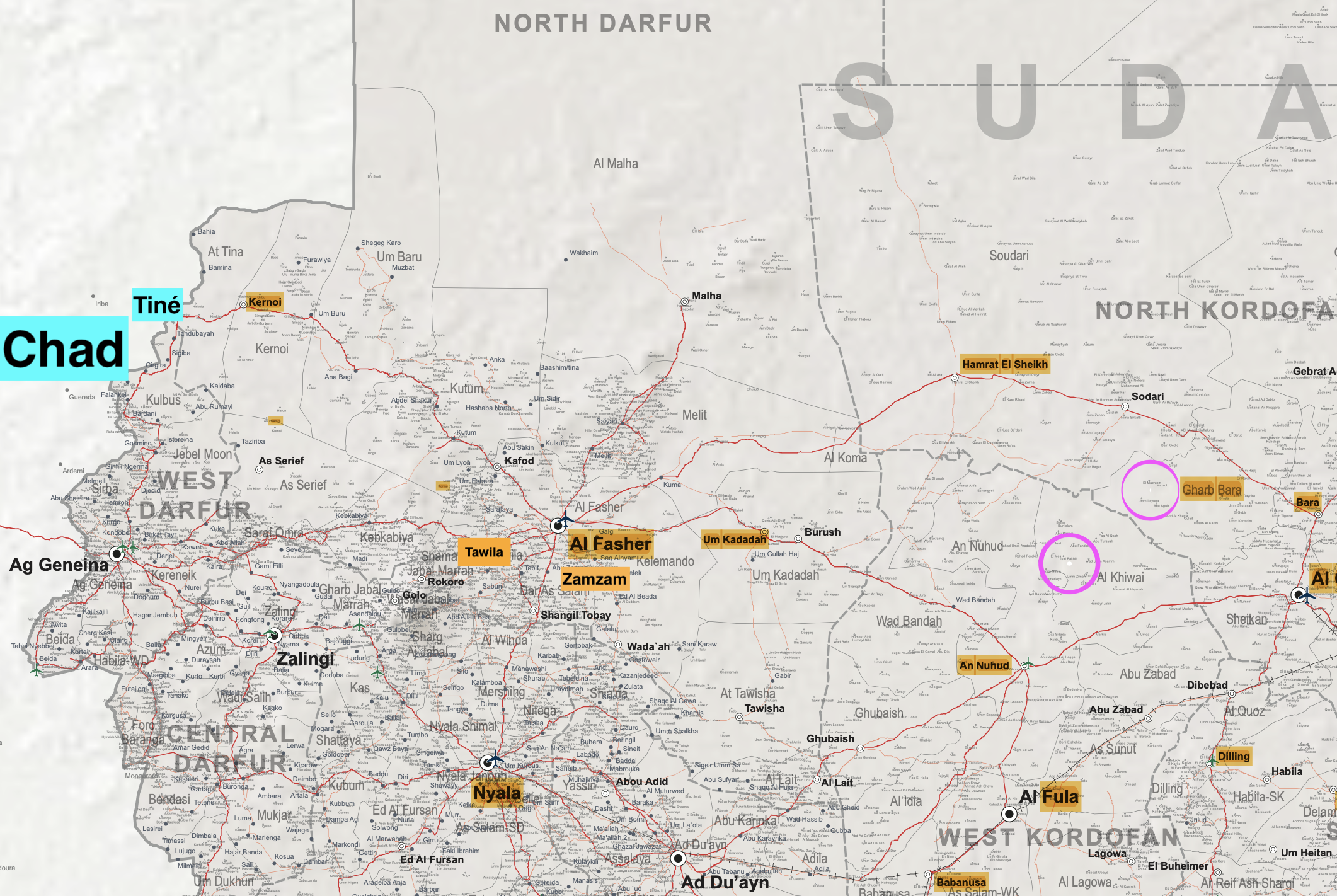
Since the beginning of May 2026, repeated attacks affecting water sources, markets, gathering places, and civilian vehicles—including reported incidents in the Tina locality—have further increased the risks faced by civilians and displaced populations.
Consequently, living and humanitarian conditions have deteriorated significantly. Many families have lost nearly everything they previously owned, including homes, livestock, money, food, clothing, and other basic necessities.
According to information gathered by the team, more than 90% of households are reportedly at risk of severe food insecurity, with children, women, older persons, and persons with disabilities among those particularly affected. Many families struggle to secure sufficient food and drinking water throughout the day. Some households may receive only one meal per day, which is insufficient to meet basic nutritional requirements and is often consumed simply to prevent starvation.
Access to humanitarian assistance remains extremely difficult. Restrictions affecting routes and entry points for humanitarian supplies have further limited access to essential assistance and increased the vulnerability of refugees.
The safety and suitability of some areas where displaced populations are living have also become serious concerns, with several locations no longer considered appropriate or safe for habitation.
Refugee communities continue to depend heavily on individual donors, volunteers, community-based initiatives, and charitable organizations. There is therefore an urgent need for sustained humanitarian intervention to provide food, clean water, medicines, shelter, sanitation facilities, and other life-saving assistance.
-
Security Situation
Although refugees are residing in camps within a neighbouring country, particularly Chad, Sudanese refugees continue to face significant security, protection, and livelihood challenges.
Among the reported challenges are restrictions on movement, including curfews and limitations on movement within and around the camp.
Refugees also face significant limitations on their ability to make independent decisions, establish small businesses, develop livelihood projects, and organize community-based development initiatives. These restrictions severely limit opportunities to establish sustainable sources of income and achieve greater self-reliance.
Trade and economic activities are similarly affected. Refugees face difficulties in developing commercial and vocational skills, introducing new products, expanding businesses, and participating fully in local economic activities.
Children and young people are also affected. Their opportunities to participate freely in sports, recreation, and other activities are limited. In some circumstances, ordinary community celebrations and social events—including weddings, traditional ceremonies, and other gatherings—are subject to restrictions, including limitations on noise in public areas, markets, and around water points.
These conditions contribute to a restrictive and challenging security environment for refugee communities and limit their ability to rebuild their lives with dignity and independence.
-
Health Situation
Health conditions in many refugee and displacement camps continue to deteriorate, creating significant risks for residents, displaced persons, and refugees.
There remains a shortage of humanitarian organizations providing adequate protection and health services. Many health facilities are either unavailable, severely limited, or unable to function adequately in areas hosting refugee and displaced populations.
This concern affects several locations and camps, including Kararyari Refugee Camp, Ardami, Bami-Jura, Selik, Korma, and other areas hosting displaced populations.
One particularly serious concern is the absence of an appropriate health-care waste disposal or incineration facility outside the camp. As a result, health-related and other waste is reportedly burned within the camp despite the high population density and the presence of children, patients, pregnant women, breastfeeding mothers, and people living with serious medical conditions.
The availability of medicines and medical treatment is also inadequate and inconsistent. Refugees continue to face shortages of essential medicines, limited access to healthcare, and insufficient numbers of doctors, nurses, midwives, and other qualified healthcare professionals.
Strengthening primary healthcare, maternal and reproductive healthcare, emergency medical services, referral systems, medicines, and appropriate waste-management facilities remains an urgent priority.
-
Zamzam Team Humanitarian Activities
The Zamzam Team has been working since 2020 in several areas of humanitarian and community support. Its activities have included community awareness, psychosocial support for survivors of sexual violence, case follow-up, support to women affected by obstetric fistula, and assistance to vulnerable and displaced communities.
Following the displacement from Zamzam Camp to Bami-Jura in Tina/Tiné, Chad, and the movement of refugees toward newly established refugee settlements, including Mayba, the team continued its humanitarian work by supporting newly arrived refugees at Bami-Jura Camp.
During the reporting period, the team focused particularly on reception assistance, food support, non-food item distribution, community support, and follow-up of vulnerable individuals and survivors.
5.1 “Fak Al-Reeq” Reception and Food Assistance
One of the Zamzam Team’s key activities is the provision of “Fak Al-Reeq” (فك الريق) assistance for children and newly arrived refugees.
“Fak Al-Reeq” is a Sudanese Arabic expression commonly associated with the first food or drink consumed after waking up, particularly breakfast. Within refugee and displacement settings, the expression has also come to represent an important form of initial food and reception support for newly arriving families who have fled conflict and devastation.
From 25 July 2026 to the date of preparation of this report, the Zamzam Team provided this reception assistance to newly arrived refugees, reaching:
- 1,480 households
- 6,854 individuals
Food Items Distributed
The following food and cooking-related items were distributed:
| Item | Quantity |
| Milk powder | 2 bags × 25 kg = 50 kg |
| Sugar | 6 bags × 50 kg |
| Charcoal | 15 bags |
| Cooking oil | 8 gallons |
| Tomatoes | 14 cartons |
| Onions | 4 bags |
| Pasta | 10 packages |
| Biscuits | 12 cartons |
| Salt | 2 packages/bags |
This assistance provided newly arrived families with immediate food support during the critical first days following their arrival at the camp.
-
Non-Food Item Assistance
On 29 July 2026, the Zamzam Team distributed essential non-food items to newly arrived refugees from several areas of Dar Zaghawa, including:
- Kazan Orshi
- Abu Leha
- Am Burro
- Qarabora
- Surrounding villages
Items Distributed
| Item | Quantity |
| Water buckets | 140 |
| Plastic sheets/tarpaulins or tents | 40 |
| Sleeping/floor mats | 80 |
These items were intended to help newly displaced families address some of their immediate shelter, water-collection, sleeping, and basic household needs.
-
Beneficiary Testimonies
The Zamzam Team’s humanitarian activities have continued to provide meaningful support to displaced families despite limited resources. Beneficiary feedback reflects both appreciation for the assistance received and the continued scale of unmet needs.
7.1 Testimony of Ms. Zakia
Ms. Zakia stated that she had greatly benefited from the services provided by the Zamzam Team. She explained that she had received support while at Zamzam Camp and later continued to benefit from assistance after arriving at Bami-Jura Camp.
She particularly appreciated the “Fak Al-Reeq” reception assistance provided to newly arrived refugees in Bami-Jura. She expressed her sincere gratitude to the donors, supporters, and individuals contributing to the programme and expressed hope that the team would be able to continue and expand its humanitarian activities.
7.2 Testimony of Ms. Mastoura
Ms. Mastoura, originally from the Orshi area, stated that she had benefited from services provided by the Zamzam Team and that the team had consistently supported newly displaced people.
She explained that she had lost almost everything she owned, including her home, money, clothing, food, and other basic necessities. As a result, she remains in urgent need of continued humanitarian assistance.
She expressed her gratitude to everyone supporting the humanitarian programme and appealed for increased assistance, emphasizing that the needs of displaced families remain significantly greater than the assistance currently available.
-
Statement from the Bami-Jura Camp Administration
The administration of Bami-Jura Camp, which is responsible for receiving refugees arriving from different areas, reported severe shortages in reception resources and basic humanitarian supplies.
The camp administration expressed appreciation for the “Fak Al-Reeq” reception and kitchen programme implemented by the Zamzam Team and appealed for additional support to ensure that newly arriving refugees receive essential food and other immediate assistance.
The statement highlights the importance of strengthening reception capacity as new arrivals continue to place additional pressure on already limited resources.
-
Survivor Stories
9.1 Story of Umm Jumaa’s Daughter
Umm Jumaa shared the story of her daughter, a survivor who had previously been displaced from Zamzam Camp.
Following the fall of Zamzam Camp, Umm Jumaa and her daughter reportedly fled toward the northeast, approximately 40 kilometres from the camp. During their journey, they were reportedly ambushed by a group of approximately 12 armed men identified by the survivor as RSF members.
According to the account provided, the attackers severely beat both the mother and daughter, causing serious physical injuries and a significant deterioration in their health.
The attackers subsequently separated the mother and daughter, and the daughter was subjected to sexual violence. She sustained severe physical injuries and experienced serious health consequences as a result of the assault.
At the time of the incident, she was 24 years old and unmarried.
Her experience illustrates the severe protection risks faced by women and girls during conflict and displacement, including the risk of sexual violence and other forms of gender-based violence.
-
Obstetric Fistula Survivor Story
Obstetric fistula is a serious health and protection concern among women and girls affected by conflict, displacement, sexual violence, and limited access to maternal healthcare.
Fatna, a young woman, reported that she was subjected to rape and sexual violence by unidentified perpetrators and subsequently became pregnant.
Due to the extremely difficult circumstances created by the conflict, combined with the collapse or unavailability of health services and hospitals, she was unable to access adequate antenatal and obstetric care.
She subsequently developed obstetric fistula during childbirth at the age of 19.
As a result, she has experienced severe physical, psychological, and social consequences. Her experience demonstrates the devastating intersection between conflict, sexual violence, displacement, and the disruption of essential maternal healthcare services.
Women and girls affected by obstetric fistula require timely medical referral and treatment, psychosocial support, protection services, and sustained follow-up to support their recovery and reintegration.
-
Key Humanitarian Needs and Priorities
Based on observations, beneficiary testimonies, and information collected during the reporting period, the following needs remain urgent:
- Emergency food assistance
- Clean and safe drinking water
- Essential medicines and healthcare services
- Maternal, reproductive, and newborn healthcare
- Protection services for women and children
- Psychosocial support and mental health services
- Support and referral services for survivors of sexual and gender-based violence
- Obstetric fistula treatment and referral services
- Emergency shelter and non-food items
- Sanitation and appropriate health-care waste management
- Livelihood and income-generating opportunities
- Support for community-based protection mechanisms
- Safe and dignified access to humanitarian assistance
- Additional reception capacity for newly arriving refugees
- Conclusion and Urgent Humanitarian Appeal
The humanitarian situation facing Sudanese refugees and displaced populations from Darfur continues to deteriorate. Families arriving at Bami-Jura Camp are frequently exhausted, traumatized, and deprived of adequate food, shelter, clean water, healthcare, protection, and other basic necessities.
The Zamzam Team continues to provide humanitarian assistance within its limited capacity, with a particular focus on community awareness, psychosocial support, survivor follow-up, reception assistance, food distribution, and non-food item support.
The assistance provided during this reporting period reached 1,480 households, representing 6,854 individuals, through the “Fak Al-Reeq” reception and food-support initiative. The distribution of non-food items additionally provided immediate assistance to newly arrived families facing urgent shelter and household needs.
However, the scale of humanitarian needs remains far greater than the resources currently available.
The Zamzam Team therefore urgently appeals to humanitarian organizations, donors, international agencies, community-based organizations, charitable institutions, and other relevant actors to provide immediate, sustained, and adequately resourced assistance to refugees and newly displaced populations.
Particular attention is required to ensure that vulnerable groups—including children, women, older persons, persons with disabilities, survivors of sexual and gender-based violence, pregnant women, breastfeeding mothers, and people with serious medical conditions—receive appropriate protection and assistance.
Continued support from humanitarian partners and donors is essential to prevent further loss of life, reduce suffering, protect vulnerable populations, and help restore dignity, safety, health, and hope to families affected by the ongoing conflict.
The Zamzam Team remains committed to continuing its humanitarian work and supporting displaced and refugee communities to the greatest extent possible. However, sustained partnership and increased resources are urgently required to respond to the growing scale and complexity of the crisis.
Humanitarian assistance is not only an immediate necessity—it is essential to preserving life and human dignity.