(Eric) The brief overview below comes from the coordinating counselor for Team Zamzam and provides a terrifying glimpse into the heart of the world’s greatest humanitarian crisis. Tina/Tiné has moved to the front line of the war against civilians by the Rapid Support Forces in North Darfur. Two days ago (February 21, 2026) the Rapid Support Forces (RSF) attacked Tina and then moved on to the area across the border in Chad. Eyewitness accounts—reported by both Sudan Tribune and Radio Dabanga—make clear that ethnically-targeted destruction continues to animate RSF violence.
Just this week the UN belatedly issued a report on the savage RSF takeover of El Fasher (capital of North Darfur) this past October, emphasizing its genocidal nature (see my brief assessment). Perhaps the most troubling part of the report prepared by the Office of the UN High Commission for Human Rights (OHCHR) is a paragraph that comes toward its conclusion:
- 105. On the day of the takeover of El-Fasher, the Rapid Support Forces leaders publicly claimed and celebrated the operation. Deputy Commander Lt. Gen. Abdel Rahim Dagalo and spokesperson Lt. Col. Al-Fatih Al-Qurashi described it as a “major and historic military victory,” praising their forces for “liberating” the city from the “terrorist Islamic army.” [They] threatened opponents with the same fate as “the terrorists,” framing the assault as part of a broader campaign extending to Port Sudan and beyond.
In short, we should expect that the genocidal assault on El Fasher will be replicated as often as United Arab Emirates (UAE) support continues—and there are no signs that it is slowing or that the international community is prepared to call out the Emiratis or their ruthless strongman, Mohamed bin Zayed. Indeed, the Trump administration seems to be going out of its way to fashion a closer (and more lucrative) relationship with the Emirates. Complicity in genocide could not be clearer.
Yesterday’s RSF attack on the Tina area (in both Darfur and Chad) represents a new and greatly heightened security risk for the civilians who continue to pour into the region. Many of these people fled the fall of El Fasher; others come from the overwhelmed Tawila Locality; and others from countless areas threatened by the RSF.


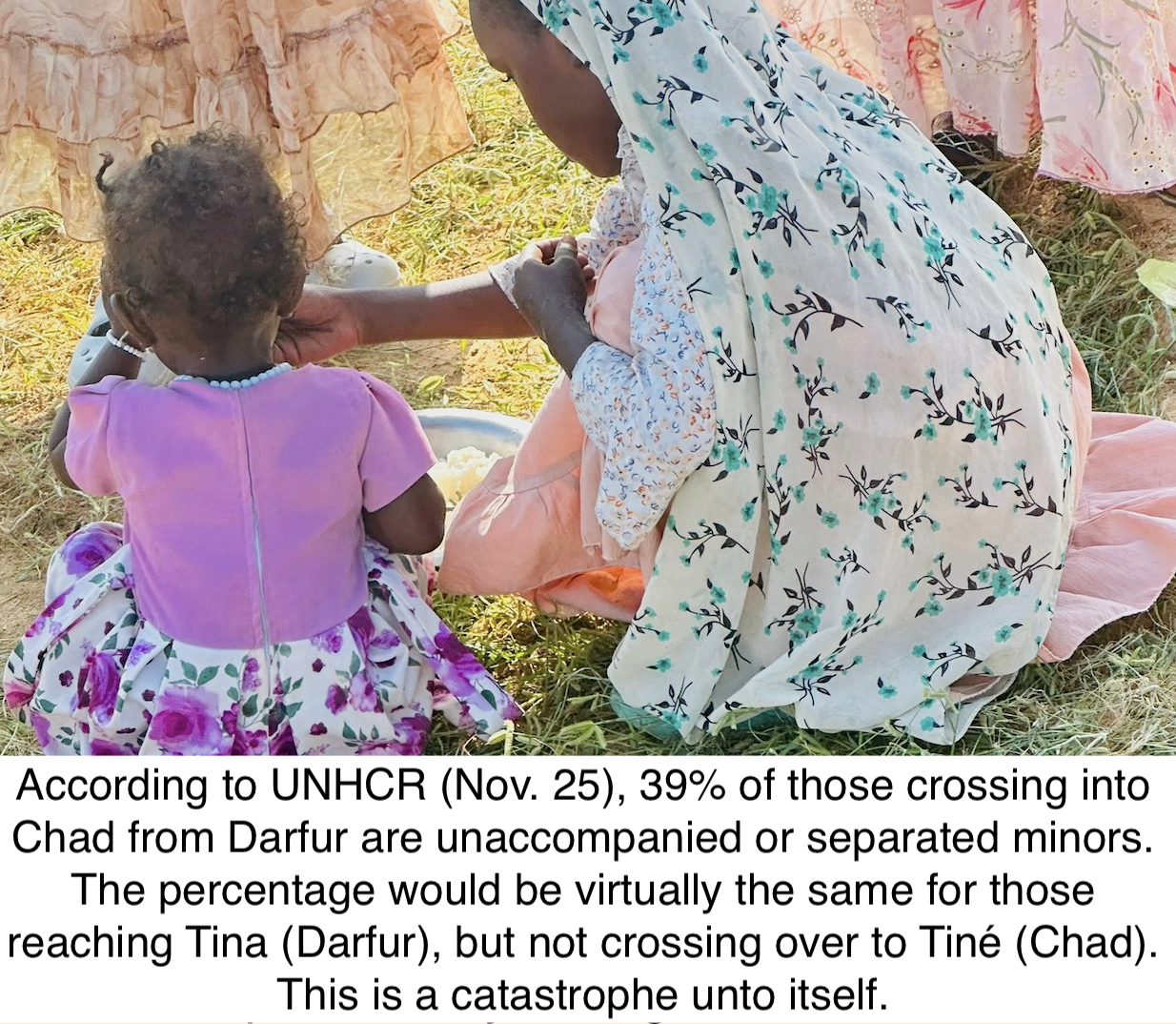
The flight to the Tina/Tiné area, where Team Zamzam and a few other small local humanitarian groups operate, is understandable; but the situation they find is exceedingly grim. Even as the head of UN High Commission for Refugees recently highlighted the crisis along the border (“Nearly 234,000 people are awaiting relocation, living in precarious conditions at the [Darfur/Chad] border”), he is forced to lament the terrible underfunding of UNHCR and other UN humanitarian agencies. (Funding per refugee per month, an important metric, has dropped from $11 to $4.)
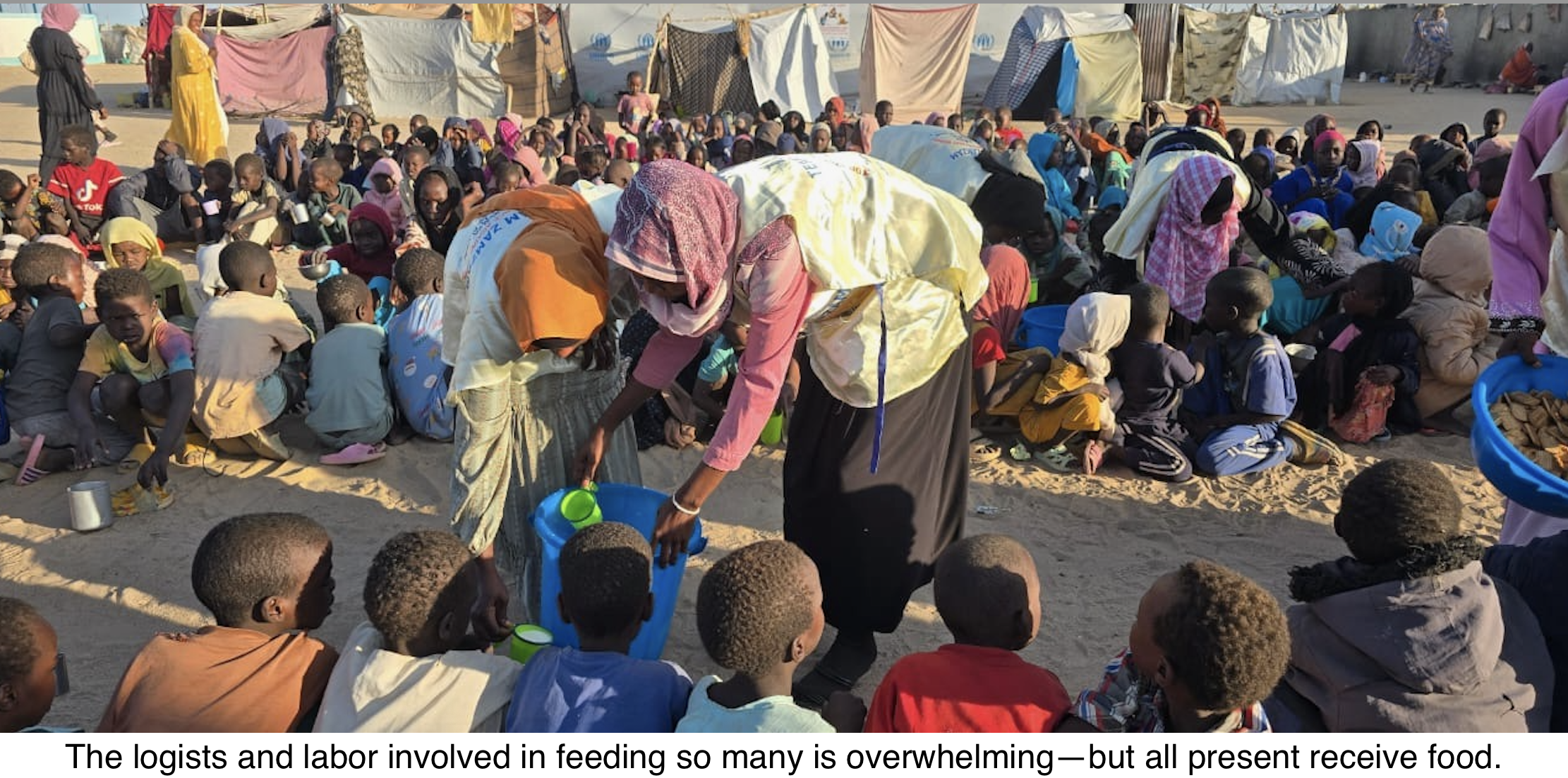
For this reason, many who flee to the border are hesitant to move on to the established refugee camps in Chad. They are extremely reluctant to leave their homeland and fear that to move further into Chad would be to seal their fates in locations that become only more grossly underserved. It is this population that Team Zamzam is assisting to the full extent the Project budget allows: food for the huge numbers of acutely malnourished children; psychosocial counseling for girls and women traumatized by sexual violence (there has been a terrible upsurge in rape by the RSF and its allies over the past two years); and medicine and sanitary supplies, as they can be afforded.
Below is the most recent report from Team Zamzam; I presume to note again how their extraordinarily important work can be supported:
A tax-deductible contribution to our project can be made using a portal on the website of a 501/c/3 organization operating in Sudan. Operation Broken Silence, working primarily on health and education issues in the Nuba Mountains of South Kordofan, has created a special site for tax-deductible contributions to our project. 100% of all funds collected go directly to Team Zamzam to support their work on the ground.
Monthly Report on the Achievements of Team Zamzam, Tina (Darfur)/Tiné (Chad) – February 22, 2026
Overview
February 2026 has continued to witness a deteriorating humanitarian situation in the border areas of Tiné, Chad and Tina, Sudan, where conflict, displacement, and insecurity have severely impacted civilian populations. Communities remain in urgent need of protection, healthcare, psychosocial support, and basic humanitarian services.
[1] Humanitarian and Health Situation in Tiné/Tina (Chad and Sudan)
The humanitarian conditions in the border regions of Tiné and Tina continue to worsen. Large numbers of displaced families are living in overcrowded settlements with extremely limited access to clean water, sanitation facilities, food supplies, and medical care.
The health situation remains particularly dire. Clinics and health posts are either under-resourced or non-functional due to insecurity, lack of funding, and shortages of qualified personnel. Preventable and treatable diseases are spreading rapidly, especially among children, pregnant women, and the elderly.
[A measles epidemic looms increasingly large in Darfur; it will be catastrophic if it reaches into the rainy season; there are no vaccination supplies available in Tiné/Tina—ER]
The lack of sufficient international, national, and regional health NGOs operating in the area has significantly exacerbated the crisis. Existing services are overstretched and unable to meet the increasing needs of the displaced and host communities. Maternal health services, trauma care, mental health support, and treatment for chronic conditions remain critically insufficient.
[2] Ongoing Crisis and Security Situation
The current crisis continues to force civilians to flee their homes in search of safety. Armed attacks, looting, and targeted violence against vulnerable groups have created a persistent atmosphere of fear and instability.
The continued threat posed by the Janjaweed militia [i.e., RSF] remains one of the primary drivers of displacement and insecurity in the region. Reports from affected communities indicate ongoing intimidation, attacks on villages, destruction of property, and widespread human rights violations.
As a result, displacement toward border areas has increased, placing additional strain on already limited humanitarian resources in both Chad and Sudan. Families arrive with little or no belongings, many having witnessed or experienced severe violence.
[3] Inspection Visits to Shelter Centres
During the reporting period, Team Zamzam conducted more than twenty (20+) inspection visits inside shelter centres hosting newly arrived displaced families.
The purpose of these visits was to:
- Assess living conditions within the shelters
- Identify urgent humanitarian and protection needs
- Register new arrivals and document their priority demands
- Monitor overcrowding and service gaps
These visits provided first-hand insight into the rapidly evolving needs of displaced populations and allowed the team to respond more effectively to emerging concerns.
[4] Coordination and Stakeholder Meetings
A total of eight (8) coordination meetings were held with:
• Local charities
• Local authorities
• Community volunteers
• Shelter representatives
The meetings focused on evaluating the current humanitarian situation, strengthening coordination mechanisms, identifying service gaps, and discussing joint response strategies.
These engagements enhanced collaboration, reduced duplication of efforts, and improved information sharing among key actors working in the area.
[5] Counseling and Psychosocial Support Services
During this reporting period, Team Zamzam conducted a total of twenty-eight (28) counseling sessions to support:
- Survivors of sexual violence
- Parents of children and women affected by traumatic fistulas
The sessions provided confidential emotional support, trauma-informed counselling, and psychological first aid. Counselors focused on helping survivors cope with trauma, rebuild resilience, and access available medical and protection services when possible. Given the ongoing insecurity and limited availability of specialized services in the area, these counseling sessions remain a critical lifeline for affected individuals and families.
[6] Number of Food Beneficiaries
Families supported: 358 families
Total individuals supported: 2,754 people
Provision of Breakfast (Severe Malnutrition Support): 2,921 children fed




Quantity of Food and Supplies Distributed
Sugar: 8 bags × 50 kg = 400 kg
Flour: 16 bags × 50 kg = 800 kg
Red lentils: 23 bags × 25 kg = 575 kg
Washing soap: 6 cartons × 48 bars = 288 bars